News
Understanding environmental exposure and health impacts: Highlights from the PARC pollution and public health training
Environmental pollution can affect human health in many ways, but understanding those links requires knowledge that crosses environmental science, exposure assessment, epidemiology and public health. To help strengthen that connection, PARC recently organised a remote training course on Pollution and Public Health: Insights from Chlor-Alkali Emissions and Trihalomethanes in Drinking Water, held on 24–25 March 2026 and 7–8 April 2026. The course was organised under the PARC Training Plan and scientifically coordinated by Joan O. Grimalt (IDAEA-CSIC, Spain ↗).
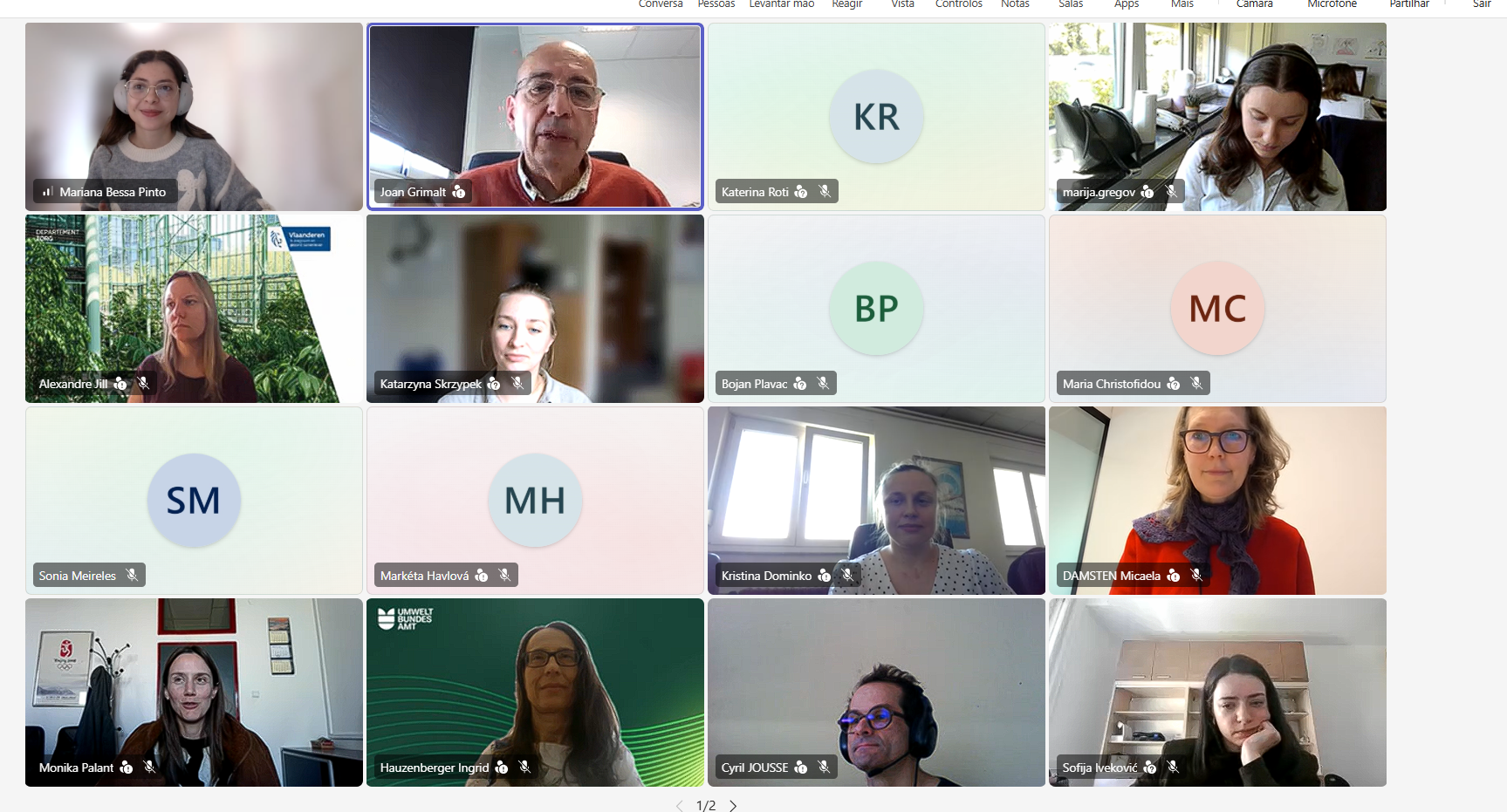
The course attracted strong interest from the community, receiving a high number of applications. Following the selection process, the course brought together 56 participants working in 23 countries (Austria, Belgium, Croatia, Cyprus, Czechia, Estonia, Finland, France, Germany, Greece, Ireland, Italy, Kenya, North Macedonia, Norway, Poland, Portugal, Serbia, Slovakia, Spain, Sweden, Switzerland and the United Kingdom). The participants represented a diverse range of professional backgrounds, including environmental science, toxicology, exposure assessment, epidemiology, and public health.
The training provided participants with a comprehensive and applied understanding of how environmental pollution is detected, characterised, and linked to human health outcomes. Through theoretical sessions and case-study-based discussions, participants explored key topics including industrial emissions, water contamination by disinfection by-products, exposure pathways, biomonitoring approaches, and epidemiological study designs.
Joan O. Grimalt, the scientific coordinator, noted:
The content of the two courses was deeply rooted in PARC's overall objective, namely, to strengthen the connection between scientific results, their outcomes, and impacts, to ensure that scientific advances are taken up and translated into significant benefits for public health and sustainability of human activities.
The program was structured into two interconnected sessions. The first focused on chlor-alkali emissions, examining environmental contamination. Particular attention was paid to the social requirements for non-target analysis once pollutants were identified. Various strategies aimed at stakeholders and authorities for safeguarding the population from health risks were discussed. In the reported case, the identification of high atmospheric concentrations of hexachlorobenzene required measures to assess cancer risks, health effects on the population, including thyroid and liver disorders, and long-range dispersion studies to evaluate exposures of people located far from the local site. The steps for creating a cohort study were presented, including biomonitoring and the evaluation of remediation measures.
The second session focused on trihalomethanes (THMs) and drinking water disinfection by-products, covering ingestion, inhalation, and dermal routes, as well as biological responses assessed through biomarkers, transcriptomics, and metabolomics. It was shown that exposure in indoor swimming pools provided a good experimental model for the assessment of health effects through these various exposure pathways. The sessions also explored regulatory frameworks, risk assessment approaches, and real-world case studies.
Participants engaged in interactive discussions and applied a shared investigative framework encompassing environmental detection, exposure assessment, epidemiology, and public health implications. The training emphasised the integration of scientific evidence into decision-making processes and highlighted the challenges associated with both industrial and municipal pollution scenarios.
Participants responded very positively to the training. Shared one trainee:
I am very satisfied with the training on Pollution and Public Health. Prof. Joan gave a very comprehensive overview of a real-world environmental health problem. He did an excellent job of presenting the different aspects of this complex issue, which helped participants understand its many dimensions. A major strength of the course was the way he combined scientific evidence with real-world experience, making the content both highly informative and practical.
By combining theoretical knowledge with real-world case studies, the course strengthened participants’ ability to assess environmental exposures and interpret their impacts on human health. It also reinforced PARC’s commitment to support evidence-based approaches in chemical risk assessment and public health protection.
With increasing attention to environmental determinants of health, this training contributed to building capacity across disciplines and fostering a shared understanding of how scientific data can inform regulatory and public health actions.
For upcoming training opportunities, stay tuned to the PARC website.