News
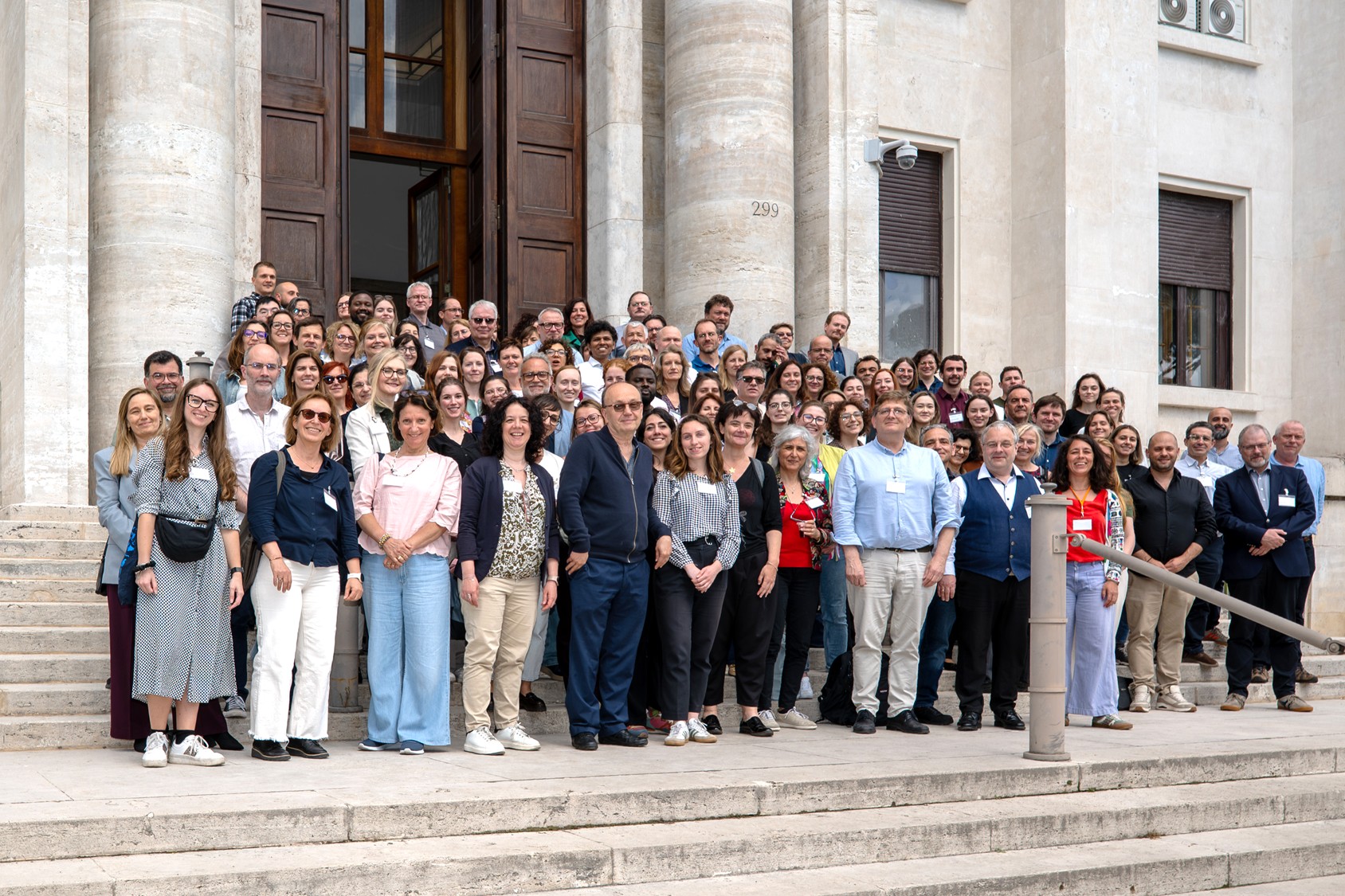
WP5 Annual Meeting in Rome: science, impact and collaboration shaping PARC's second phase
More than 100 researchers, regulators and project partners gathered in Rome on 13–15 May for the WP5 (Hazard Assessment) Annual Meeting, hosted by the Istituto Superiore di Sanità ↗. Bringing together participants from across Europe both onsite and online, the three-day event marked a significant moment as PARC enters its second phase with a clear shared ambition: to ensure that the scientific achievements of the first cycle translate into lasting regulatory impact.
Projects, results and new directions
The meeting opened with internal project meetings and kick-off sessions, providing partners with dedicated space to align on objectives and strengthen collaborations ahead of the second PARC phase.
At the core of the three days, time was given to WP5 projects ending, each invited to reflect not only on their scientific achievements but also on the regulatory impact of their results. Among the highlights: the closing of critical data gaps on BPA alternatives in environmental risk assessment and on toxins in human health. Several projects will continue their work through dedicated follow-up projects - including those focusing on natural toxins, phenols (BPA alternatives including alkylphenols), non-genotoxic carcinogens, immunotoxicology, neurotoxicology, and AOP development - ensuring that the knowledge built in the first cycle feeds directly into the second.
Projects that started in May 2025 also presented their updates, showcasing early results and progress against their regulatory objectives.
Looking ahead, the meeting marked the launch of projects starting in May 2026, a new generation of WP5 science designed for regulatory impact from day one. Of particular note was the introduction of three new projects focused on the development of NAMs for ecotoxicity, reflecting WP5's growing commitment to next-generation approaches for environmental risk assessment.
A special mention goes to the launch of a new transversal project developed in collaboration between PARC WP5 and EFSA ↗, dedicated to structuring hazard data and the associated (PBK, TK-TD, QSAR and landscape) model codes using internationally harmonised standards. The project aims to make NAM-based hazard data and model codes openly accessible, reusable and fit for regulatory use, supporting One Health implementation across EFSA, ECHA ↗ and EEA ↗, and ensuring that PARC's data and tools remain available well beyond the project lifetime.
Impact of results: agency dialogue, success stories and good practices
A highlight of the meeting was the two-part session on impact of results, designed to help participants to see their own work through a new lens. Rather than asking what more could be done, the session started from a different premise: that partners are already doing all the right things and that the opportunity lies in making that work travel further and reach the people who can act on it.
Colleagues from ECHA and EFSA shared concrete examples of how WP5 outputs have informed regulatory processes, from substance prioritisation to the uptake of new methodologies. Their contributions were met with genuine enthusiasm from the room. ECHA highlighted how WP5 projects are directly addressing the Key Areas of Regulatory Challenge ↗ (KARC), with concrete examples including the prioritisation of BPA alternatives and a bidirectional collaboration on the Neurotox project. EFSA shared examples of how WP5 results are filling critical data gaps in the risk assessment of toxins and PFAS. The discussion that followed, enriched by the presence of representatives from national authorities across Europe, was one of the most animated of the meeting.
Hearing directly from the agencies about how they use our results changes the way you think about your own work. It makes the connection between the science and the regulation feel real. - said a meeting participant
This is exactly the kind of dialogue we need more of. It shows that our results are not disappearing into reports — they are being used. - noted another participant
Education is bidirectional — following WP5 projects closely not only informs regulatory practice but also deepens our understanding of the science behind the methods. - highlighted an ECHA representative
Thursday afternoon’s session opened by shining a light on two initiatives unique to PARC WP5 that exemplify what is possible when science and regulation work in close dialogue: the Rapid Response Mechanism, which allows European agencies to activate targeted data generation on demand, and the TG+ studies, which fill regulatory data gaps by performing test guidelines and alongside additional OMICs analyses.
Projects starting in May 2026 also presented their plans with a clear regulatory focus, setting out how their objectives and expected outputs connect directly to the needs of risk assessment authorities — framing their science around the question: what will regulators be able to do with your results?
The session closed with a participative Good Impact Practices activity, in which all participants - onsite and online - collectively built a shared set of principles for making research results more visible, accessible and useful. Through a live interactive session, contributions clustered around five themes: designing projects in co-creation with regulators; using PARC documents as regulatory communication tools; making data FAIR and openly accessible; fostering collaboration and network development; and standardising methodologies across labs. The resulting contributions will be compiled into a WP5 Good Impact Practices document to be shared with the whole community.
The meeting also featured a dedicated Cross-PARC session bringing together representatives from other work packages. The discussions touched on harmonised quality criteria in toxicity testing, NAMs for NGRA, the roadmap towards phasing out animal testing, the second PARC training plan, communication and dissemination, and data management. It was a fitting close to a meeting built around a single conviction: that the impact of WP5's work grows not only through what each project produces, but through the connections it builds, within WP5, and across PARC.
Poster sessions and award
Three dedicated poster sessions offered partners the opportunity to showcase their results across a wide range of thematic areas. The quality and diversity of contributions was remarkable.
Congratulations to the Poster Award winner, Blandine Descamps Swiss Federal Institute of Technology Zürich (ETHZ)!