News
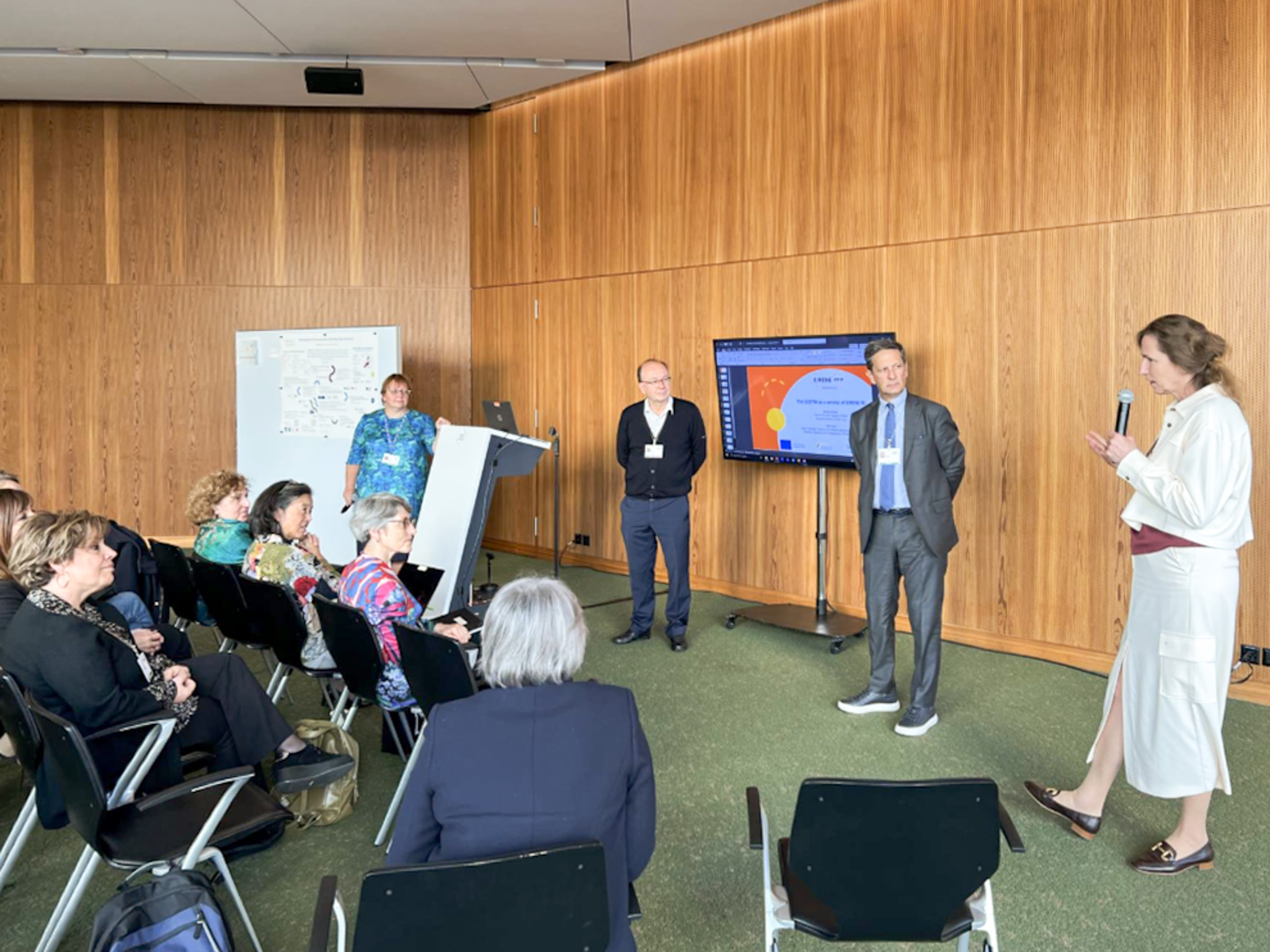
PARC showcases mercury risk assessment tools at Minamata Convention
The European Partnership for the Assessment of Risks from Chemicals (PARC) presented innovative risk assessment methodologies at the 6th Conference of the Parties to the Minamata Convention on Mercury, held in Geneva, Switzerland, from 3 to 7 November 2025.
The knowledge lab, entitled "How Partnerships and Research Infrastructures Enhance Implementation of the Minamata Convention", was jointly organised by RECETOX ↗ and partners from the PARC Partnership and the EIRENE ↗ consortium. The session, held in the exhibition area, showcased innovative tools supporting national implementation of the Convention, including real-time mercury data platforms, population exposure assessment tools, and risk-mitigation strategies.
At this event, Pascal Sanders from ANSES ↗, France, who coordinates the PARC Partnership, together with Jana Klánová and Kateřina Šebková from RECETOX, introduced several key aspects of PARC. In his presentation, Pascal Sanders demonstrated how novel risk assessment tools and methodologies developed within the EU PARC project can assist regulators across Europe in making timely and informed decisions to reduce mercury exposure in populations and mitigate environmental contamination. His presentation included compelling examples of harmonised population studies conducted across European countries.
The session was chaired by Kateřina Šebková from the Stockholm Convention Regional Centre hosted by RECETOX. Additional contributions were made by Jana Klánová, Director of RECETOX, representing the EIRENE consortium. In her presentation, she emphasised the importance of synergising existing data and methods globally, presenting examples from the EIRENE project’s efforts to build capacity for human exposome research and environmental health risk assessment. She stressed that success depends on effectively utilising existing research infrastructures rather than creating new ones.
Pirrone concluded by presenting EIRENE research infrastructure services and illustrating how CNR models can support the implementation of the Convention by visualising future mercury emission scenarios based on policy decisions, using data from the GMOS network for harmonised global and regional mercury monitoring.
All speakers underscored the critical importance of strong links between scientific research and policymaking, emphasising the need for cohesive data frameworks to support effective monitoring and implementation of the Convention.
RECETOX acknowledges the support of the Ministry of the Environment of the Czech Republic ↗ and the contributions of PARC and EIRENE partners in organising the knowledge lab.