News
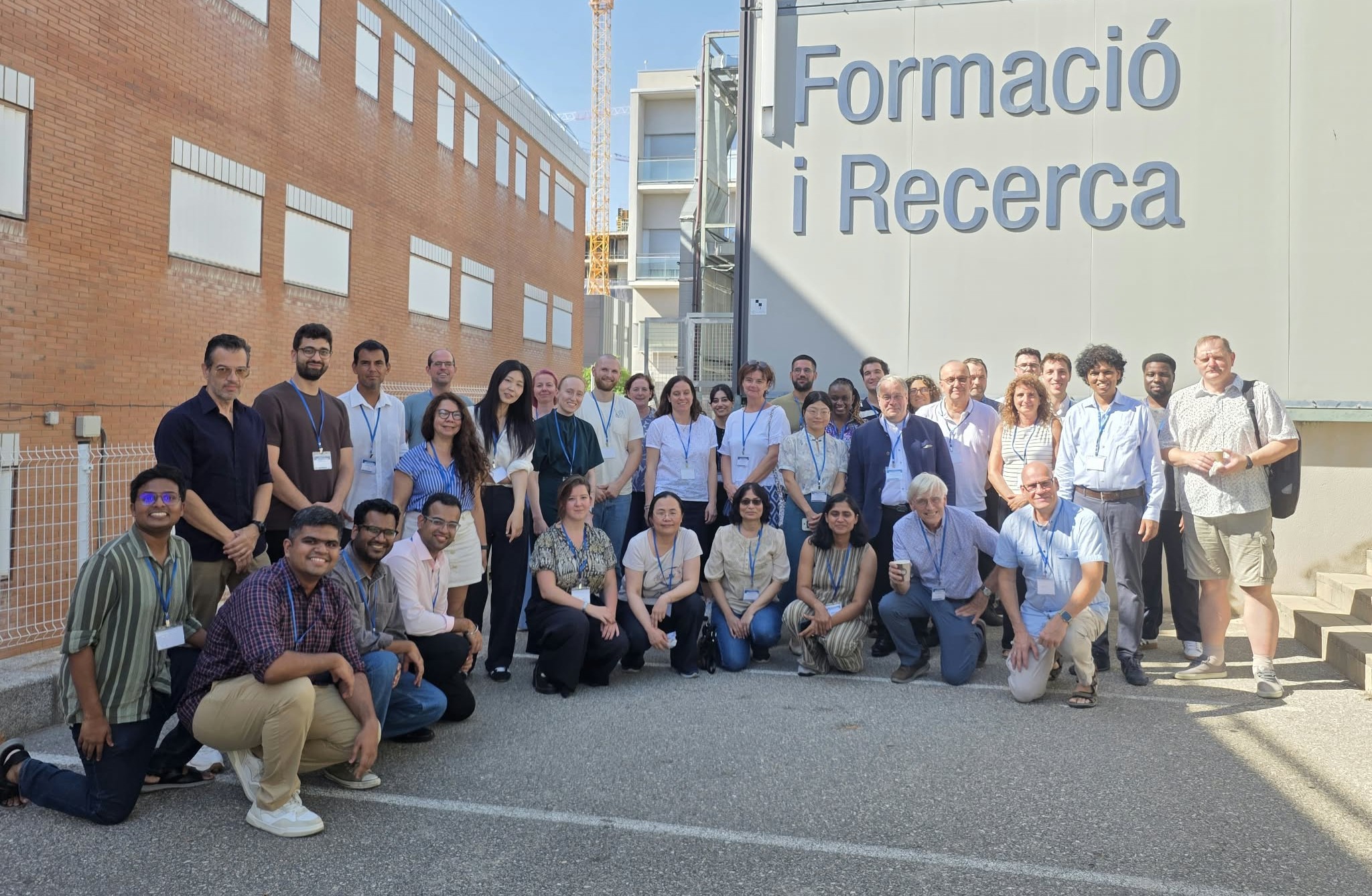
Four days in Tarragona: Scientists explore how artificial intelligence can help in chemical risk assessment
Artificial intelligence (AI) has by now become a common and almost unavoidable concept in science. This is due to its broad applicability, which still leaves many niches unexplored. From the unexplored and untested arises a desire for international scientific co-creation. This is how the hackathon in Spain came about.
Twelve junior researchers from France, Spain, Italy, Sweden, Slovenia, Greece and Germany spent together four days in Tarragona, Spain, from 7 to 10 September. The occasion to head to Tarragona was the PARC Hackathon for Bioinformatics. The shared scientific challenge set before the international group of researchers was to identify the advantages of AI and to apply them in toxicology and chemical risk assessment. They were assigned specific tasks, which they tackled by drawing on the best of teamwork. The advantages of AI that they sought were meant to lead to modelling with reproducible results, and to improve evidence assessment, knowledge representation and chemical-specific parameterisation.
The four projects to which the researchers applied AI were: Large Language Model (LLM)-assisted FAIR Physiologically Based Pharmacokinetic (PBPK) model building; an agentic system for Weight of Evidence assessment; an Adverse Outcome Pathways (AOP) ontology; and a pipeline linking Quantitative Structure–Activity Relationship (QSAR) and Physiologically Based Pharmacokinetic (PBPK) models.
Throughout their work, the researchers had mentoring support. Their progress was followed by a group of eight mentors from Spain, Germany, Slovenia, the Netherlands and Estonia.
To boost motivation further, the event also included a competition. Four groups submitted their work for assessment by a panel of three judges. The highest-rated team was awarded a prize for its achievement.
Four days spent exploring the possibilities of AI and advancing science leave a wealth of impressions. Here are some of them.
The PARC Hackathon marked our very first initiative dedicated to bringing our junior community together to tackle complex research problems in the age of AI! The hackathon focused on exploring cutting-edge technologies, specifically bridging the gap between Large Language Models (LLMs) and deep expertise in biology. Participants worked tirelessly over four continuous days to solve core challenges and deliver initial proofs-of-concept. This intense collaboration has successfully paved the way for these researchers to continue working together and driving innovation forward. – words from Deepika Deepika and Vikas Kumar, the scientific coordinators of the Hackathon.
Participating in the PARC Modellers Meeting 2026 Hackathon was one of the most enriching experiences of my postdoctoral training. It provided an excellent opportunity to learn from experts across different fields of chemical risk assessment, apply new concepts in real time, and build connections that have continued to broaden my scientific perspective beyond the event. The Hackathon was a truly multidisciplinary experience, bringing together different perspectives to address real-world challenges in chemical and biological modelling. I particularly valued the relevance of the topics, as well as the opportunity to connect with researchers working at the forefront of these scientific challenges. – said Edgar Lopez, a trainee.
I had the opportunity to participate in the hackathon focused on the application of AI to scientific and biomedical research, where I worked on the AOP Ontology development and refinement. It was an absolute pleasure working on it under the supervision of esteemed mentors, and with the colleagues from different institutes within PARC. I learnt a lot from them and developed a working prototype which would help in future harmonisation and knowledge representation of AOPs and their usage in chemical risk assessment. Apart from this, I also met different researchers working on different projects towards the same end goal: making risk assessment easy and accurate.– shared Shubh Sharma, a participant.
Beyond developing technical skills, researchers from different institutions and scientific backgrounds laid the groundwork for continued co-creation.
For upcoming training opportunities, stay tuned to the PARC website.