News
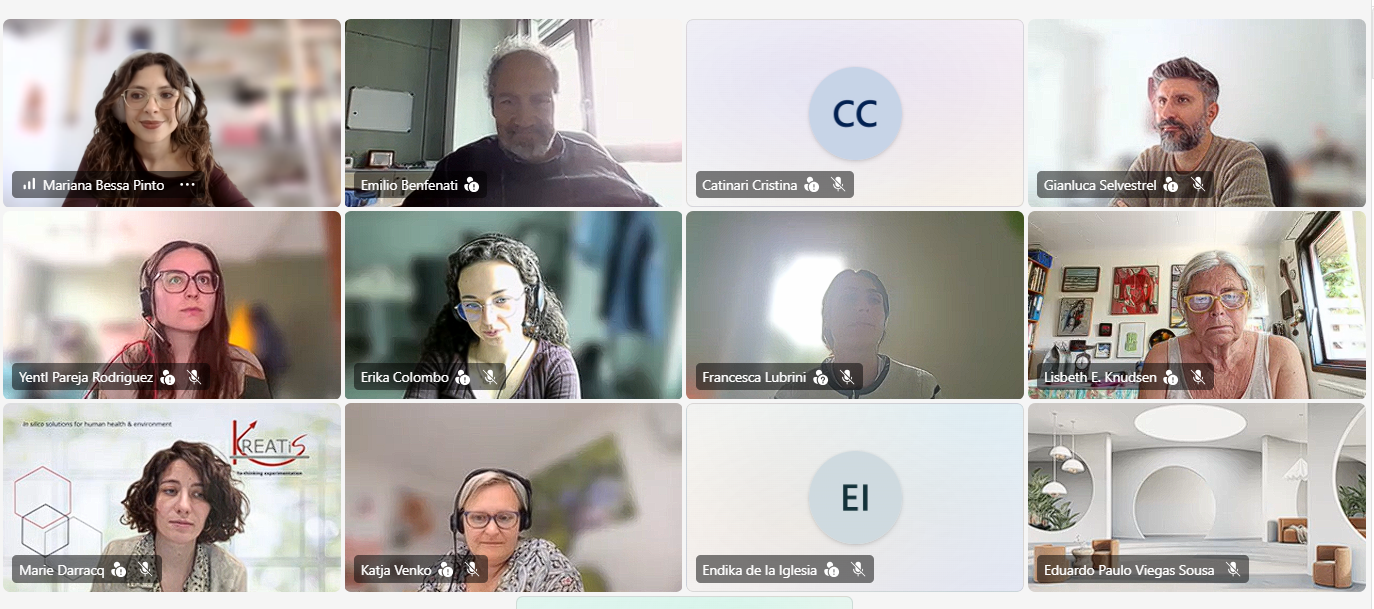
Strengthening practical skills in in silico models: Highlights from the 2nd PARC training on exercises on results of in silico models and read-across using VEGAHUB
On 18-19 May 2026, the Istituto Mario Negri ↗ (IRFM) , Italy, delivered the second edition of the PARC remote training course “Exercises on results of in silico models and read-across using VEGAHUB”. Organised as part of the second PARC Training Plan, the course brought together 42 participants from 21 countries, with very diverse backgrounds.
Building on the foundations established in the previous edition, this intermediate-level course focused on the practical interpretation and critical evaluation of in silico model outputs and read-across approaches. Through hands-on exercises and guided discussions, participants learned how to analyse multiple lines of evidence and make informed decisions when assessing chemical properties using modern computational tools.
Emilio Benfenati, the course's scientific coordinator highlighted:
Lack of training is a main barrier in many cases, preventing the broad use of the in silico models. We are committed to facilitating the application of in silico models, and the courses are probably the best way to increase the use of in silico models.
The programme was organised into two complementary modules. The first focused on the assessment of cosmetics, introducing participants to the use of CosmoLIFE and ToxEraser for the evaluation of cosmetic ingredients and the identification of safer alternatives. The second module addressed environmental and ecotoxicological properties through the use of VEGA, VERA, and ToxRead, with practical examples related to bioaccumulation and fish toxicity. Throughout the course, participants explored cover models for mutagenicity, genotoxicity, carcinogenicity, endocrine disruption, and ecotoxicological effects.
The sessions were delivered by experts from IRFM and combined practical exercises with collective discussions, enabling participants to compare results, evaluate their reliability, and understand how different sources of information can be integrated into a coherent assessment. The course emphasised not only the predictive capabilities of the tools but also the importance of interpreting outputs and supporting regulatory decision-making.
Participants responded very positively to the training.
Mahsa Mobasheri, a trainee working in Denmark shared:
I found the course very informative and practical, particularly in demonstrating how in silico models and read-across approaches can support chemical safety assessment. As a small suggestion for future courses, it would be very helpful if the sessions could be recorded, as this would allow participants to revisit more technical parts and maximise the learning experience.
By focusing on the practical application of in silico methodologies, the training contributed to PARC’s objective of promoting innovative, non-animal approaches to chemical safety assessment. It also strengthened participants’ capacity to critically evaluate computational predictions and apply them in scientific and regulatory contexts.
For upcoming training opportunities, stay tuned to the PARC website.